

Sea Technology Service’s Chief Electronic & Software Design Engineer, Andre Hoek, successfully commissioned eight new-design Acoustic Optical Sensors (AOS III) units and two high definition Deep Stereo Camera Probes (UCam) at the recently built Southwest Fisheries Science Centre, in La Jolla, San Diego, U.S.A.
The manufactured instruments were jointly designed by NOAA’s San Diego based Advanced Survey Technologies group and Sea Technology Services.
|
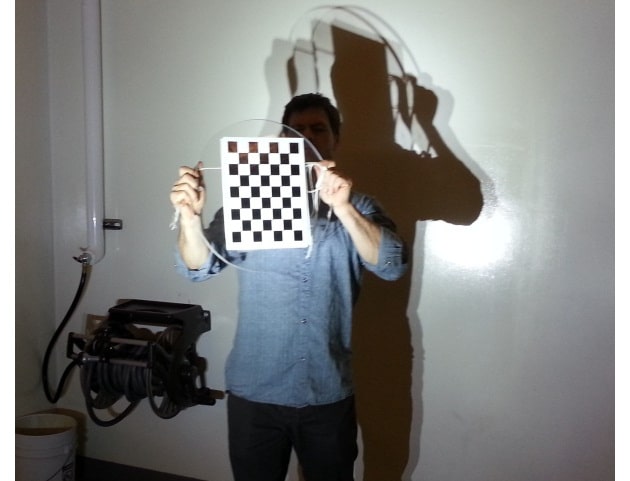
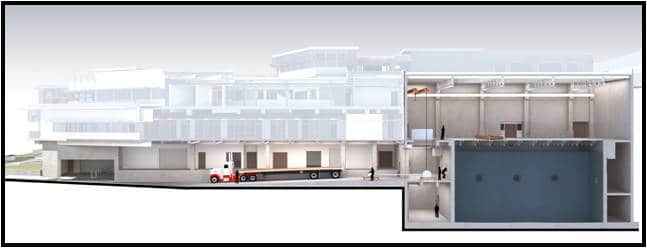
Acceptance testing and characterization of the optics was done on both the AOS III and UCam systems the Ocean Technology Development Tank at the recently built Southwest Fisheries Science Centre, in La Jolla, San Diego. Acoustic calibrations of the AOS III bi-directional transducers were also completed in the test tank, before both the AOS III and UCam systems were ocean deployed off San Diego for further testing. Advanced Survey Technologies commissioned Sea Technology Services to develop and manufacture AOS III after the successful utilization of AOS units on the Scripps Institute of Oceanography’s California Current Ecosystem mooring buoys. AOS units fitted with 18-month battery packs have been transmitting acoustic, photographic and oceanographic data from the Scripps moorings every hour for the past 18 months. Data from moored AOS units can be viewed here on the Scripps Institute of Oceanography’s California Current Ecosystem mooring website. AOS III is a bi-directional, acoustic-optical sampler for mapping the dispersions of fishes and estimating their abundances, by species, over large areas, in a non-lethal manner. Its neutrally buoyant, 800m, non-metallic pressure casing makes AOS III capable of being carried by gliders and other lightweight platforms. AOS III miniature, integrated sensors provide an efficient, ship-independent, complementary approach to ecosystem-based sampling. AOS III augments ship-based surveys in marine protected areas (MPAs), enables non-lethal surveys of endangered or protected species, and allows observation of fish and zooplankton in the boundary areas that are traditionally inaccessible to sampling.
|
 |


AOS III is an enhanced version of the successful AOS units that have been deployed off California for the past 18 months. AOS III features include:
- Integrated scientific grade micro-echosounder
- Bi-directional calibrated transducers
- Adaptive sampling camera with LED strobe lighting
- Integrated precision temperature sensor
- Attitude sensor with pitch roll and heading orientation for acoustic data
- Up to 64GB of on-board storage
- On-board acoustic data processing
- Bin averaged acoustic data, photos and oceanographic data transmitted every 30 minutes
- Data sent via inductive modem and satellite to web-browser-based shore software
- Configurable telemetry for interfacing with inductive modems and other equipmentInternal batteries or optional external extended-life battery packs
- Tethered long-range USB connection for test tank calibrations
- All plastic, non-corrosive, neutrally buoyant pressure casings